How Kiln Drying Works and Why Moisture Content Matters
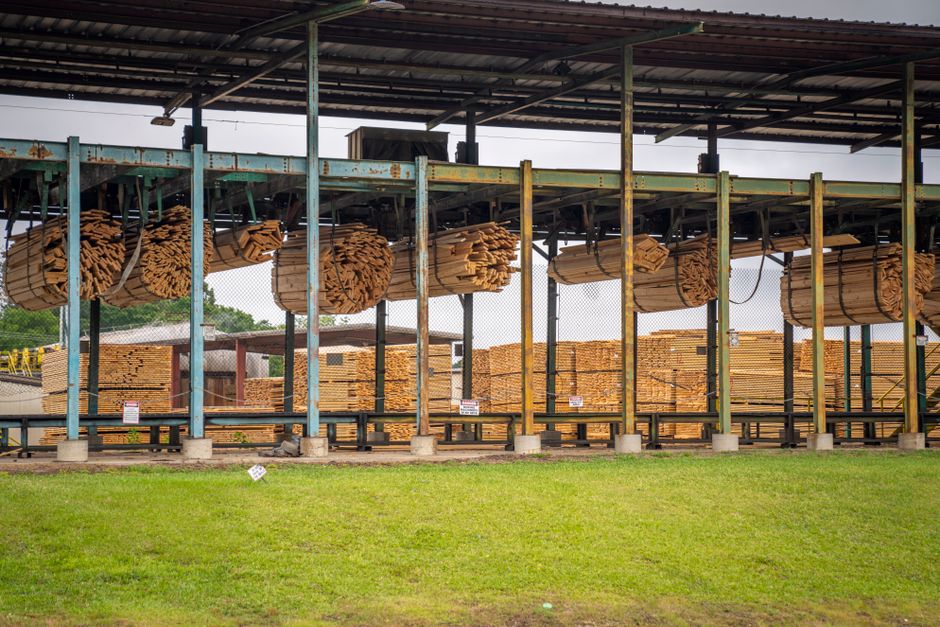
Wood moves with moisture. Take water out slowly and evenly and you get a stable board. Take it out badly and you get cracks and warps. This is how kiln drying works and what to look for in kiln-dried hardwood.
Wood and water
A living tree holds a lot of water, both in the cells and within the cell walls. Once a board is cut, it starts to give up that moisture to the surrounding air. As it does, the wood shrinks, mostly across the grain and only a little along its length.
That shrinking is why moisture content matters. If wood keeps changing size after you build with it, joints open, panels cup and finishes crack.
What happens inside a kiln
A kiln is an enclosed chamber where the temperature, humidity and airflow can be controlled. Boards are stacked with thin strips between the layers so air can move through. The kiln then dries the load on a schedule suited to the species and thickness.
The point is control. Heat drives water out, and humidity is managed so the surface does not dry so fast that it splits.
Why the schedule matters
Different species and thicknesses dry at different speeds. Thick boards and dense hardwoods need more time. Rushing the process can cause checks, honeycombing and internal stress that only show up when you start to cut.
Good drying is unhurried and monitored. The people running a kiln measure moisture in sample boards to know when a load is done.
Air drying versus kiln drying
Many people air-dry lumber outdoors under cover, which works slowly and depends on weather. A kiln is faster and reaches a lower, more consistent moisture level, which is why furniture and cabinet makers often insist on it.
Some builders combine the two, air drying first and finishing in a kiln. Either way, the goal is a board at a moisture level that suits where it will live.
Checking lumber when you buy it
A moisture meter gives a quick reading, and many woodworkers carry one. Look for even color, flat boards and ends without deep splits. After purchase, store lumber indoors or under cover, stacked flat and with air moving around it.
Letting wood settle in your shop
Even perfectly dried lumber takes on or gives up a little moisture with the seasons. A board bought in a dry mill and brought into a humid space will swell slightly. Give boards time to reach balance where you work before you cut and join them.
Sticker them, meaning stack with spacers between layers, and keep air moving. Then check flatness again before you mill. A few days of patience is cheap insurance.
Common drying defects
Several problems can show up in poorly dried lumber. Surface checks are small cracks along the face. End checks form where moisture escapes fastest from the cut end of a board. Case hardening leaves the outside dry and stressed while the inside stays wetter, which can make a board spring or bind on a saw when you rip it.
Warp, including cup, bow and twist, happens when different parts of a board shrink unevenly. Careful stacking, good airflow and a steady schedule reduce all of these.
Ask how the lumber was dried, how long ago, and how it has been stored since. Ask whether moisture was checked and how. If you need a specific moisture level for a project, say so before you buy. A supplier who dries and stores lumber carefully will be glad to explain how.
It is also worth remembering that drying does not make wood immune to moisture. A dry board left in a wet space will take water back on. Plan the finish, the storage and the room where the piece will live, because those choices decide how stable your work stays after it leaves the shop.
Kiln-dried hardwood from our mill
Heartland Hardwoods sells kiln-dried hardwood lumber from our sawmill in Effingham, Illinois, as well as green stock. Call to ask what species and sizes are available.
Need dry stock for a build? Tell us the species and sizes and we will let you know what kiln-dried lumber we have.